그냥 좋은 도시, 경주
“Coco, which city would you most like to live in?” “Gyeongju.” “Can you tell me why?” “I just liked it. And the sea’s close by.”
“코코야, 제일 살아 보고 싶은 도시가 어디야?” “경주.” “이유를 말해 줄 수 있어?” “그냥 좋았어. 바다도 가깝고.”
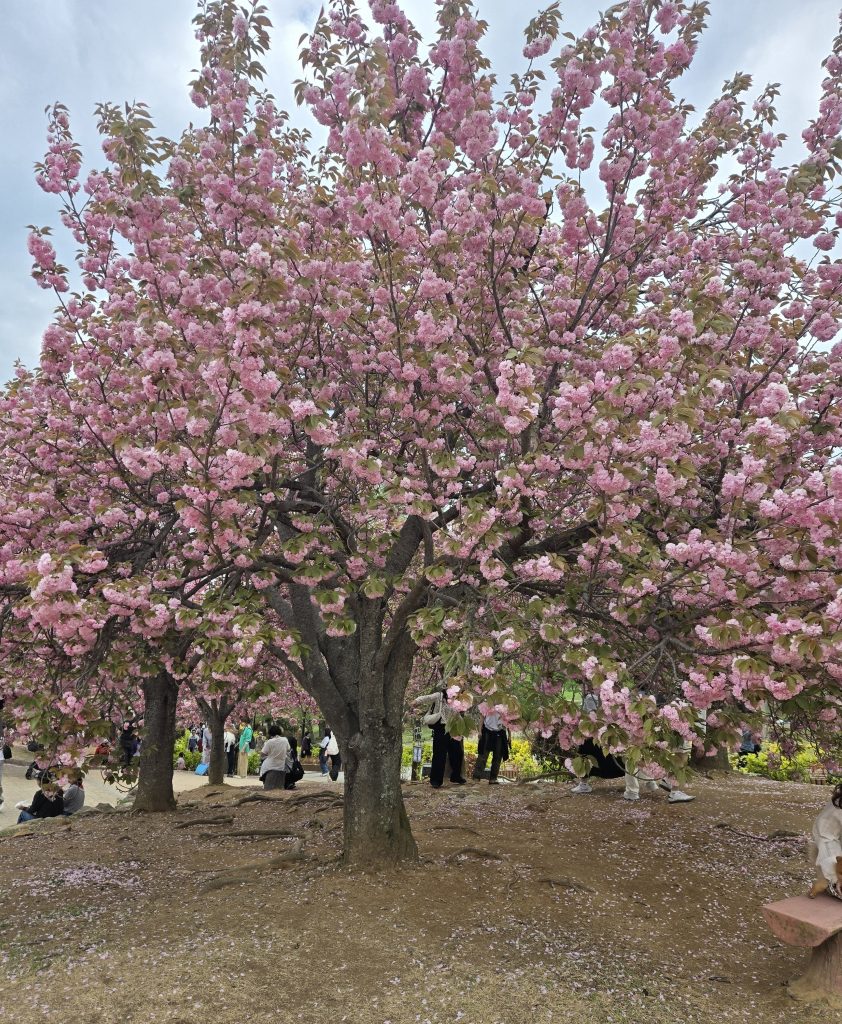
That was our conversation after Coco and I came back from Gyeongju around April 20, when the deep-pink double cherry blossoms were in full bloom. I expected her to talk about the ancient sites, which are everywhere there. Instead, she simply said she liked the way the city felt.
지난 4월 20일 무렵, 진분홍 겹벚꽃이 한창일 때 코코와 경주에 다녀온 뒤 나눈 대화다. 넘쳐 나는 유적 이야기를 할 줄 알았는데, 코코는 그저 경주가 주는 느낌이 좋았다고 했다.
Seoul, too, keeps the palaces of the Joseon kings, who ruled for some five hundred years. Yet Gyeongju holds something harder to put into words. For a thousand years it was the capital of a single kingdom, and its ground seems to hold a long-gathered jeonggi, the clear, deep energy Koreans believe a place can carry. Traces of that age lie open across the city, with no walls around them. Like Rome, it is a city where history simply sits in the streets. Koreans call it a museum without walls.
서울 도심에도 500여 년 조선 왕실의 궁궐이 남아 있다. 그런데 경주에는 말로 다 하기 어려운 무언가가 더 있다. 천 년 동안 한 왕조의 수도였던 땅에 오래 쌓인 정기(精氣), 곧 그 땅에 서린 맑고 깊은 기운이다. 그 시절의 흔적이 담장 하나 없이 시내 곳곳에 펼쳐져 있다. 로마처럼 도시 전체가 유적인 곳, 한국 사람들이 ‘지붕 없는 박물관’이라 부르는 도시다.
Of all its ancient sites, the one that stays with me most is Daereungwon. Within walking distance of Wolseong, where the royal palace once stood, twenty-three great round mounds rise from the ground. Silla’s kings, queens, and nobles lie beneath them.
그 많은 유적 가운데 내 눈에 가장 특별한 곳은 대릉원이다. 옛 왕궁 터 월성에서 걸어서 닿는 곳에, 신라의 왕과 왕비, 귀족이 잠든 크고 둥근 무덤 스물세 기가 모여 있다.
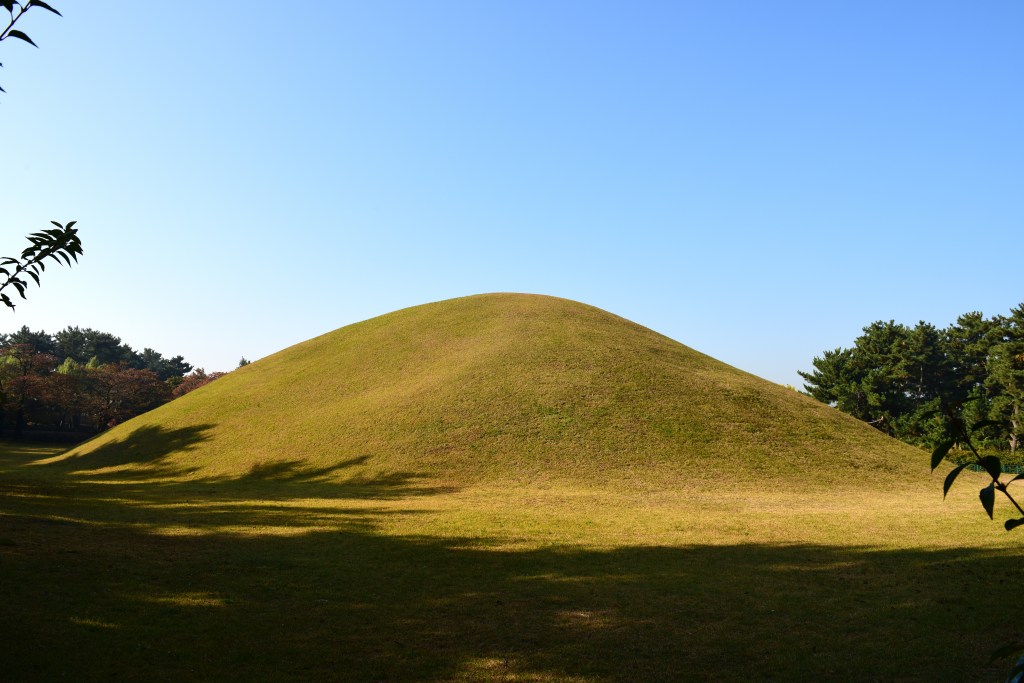
These tombs escaped grave robbers for centuries, and the secret is in how they were built. The body and grave goods were laid in a wooden chamber, river stones were heaped over it like a small mountain, and the whole was sealed with earth. Archaeologists call them stone-mounded wooden chamber tombs. There is no passage in, and anyone who digs brings the stones down and blocks the way. Most tombs built with an entrance passage were looted long ago, but here gold crowns and glassware that had traveled from lands far to the west lay untouched for about fifteen hundred years. Perhaps it is the presence of so much that has endured for fifteen centuries that gives this city its particular aura.
이 무덤들은 오랜 세월 도굴을 피했다. 비결은 구조에 있다. 나무로 짠 덧널에 주검과 껴묻거리를 넣고, 그 위에 냇돌을 산처럼 쌓은 뒤 흙으로 덮었다. 돌무지덧널무덤이다. 드나드는 통로가 없고, 파고 들어가면 돌이 무너져 내려 길을 막는다. 통로가 있는 돌방무덤들이 대부분 일찍 도굴된 것과 달리, 이곳에서는 금관과 멀리 서역에서 온 유리그릇이 천오백 년 안팎을 땅속에서 고스란히 견뎠다. 천오백 년을 견딘 그 많은 것들이 내뿜는 기운이, 이 도시만의 특별한 아우라를 만들고 있는지도 모른다.
Why did the people of Silla bury their kings so close to the palace, on the flat ground where everyone lived? Perhaps they believed the kings who had gone before would stay close and watch over the kingdom. The palace’s wooden halls vanished long ago, but the earthen mounds remain, still keeping watch over the heart of the city. In a way, their wish came true.
왜 신라 사람들은 왕의 무덤을 궁궐 가까이, 사람들이 사는 평지 한가운데 두었을까. 떠난 왕들이 곁에서 나라를 지켜 준다고 믿었을지도 모른다. 세월이 흘러 궁궐의 나무 건물은 모두 사라졌지만, 흙무덤들은 그대로 남아 오늘도 경주 도심 한가운데를 지키고 있다. 옛사람들의 바람이 이루어진 셈이다.
Strangely, when you walk among those mounds, time seems to slow and the mind settles. The Joseon kings were all buried outside the capital walls, but Daereungwon sits right beside neighborhood walking paths, parks, and a street of cafés.
희한하게도 그 무덤 사이를 걷다 보면 시간이 느리게 흐르고 마음이 편안해진다. 조선의 왕릉이 모두 도성 밖에 자리 잡은 것과 달리, 대릉원은 동네 사람들의 산책길, 공원, 카페 골목과 맞닿아 있다.
I have long wondered where the line between life and death really lies, and these tombs in the middle of everyday life never stop fascinating me. I can feel how warmly our ancestors kept death and memory close, inside ordinary days, instead of pushing them away.
오랫동안 삶과 죽음의 경계를 궁금해해 온 나에게, 삶의 터전 한가운데 자리 잡은 이 무덤들은 참 신기하다. 죽음을 멀리 두지 않고 일상 속에 품었던 조상들의 따뜻한 시선이 느껴진다.
They say the deepest intuition comes not when we are tense but when we are most at ease. In Gyeongju, the five senses loosen on their own. Who knows? If I keep going back, I may one day meet the deep intuition waiting inside me.
깊은 직관은 긴장할 때가 아니라 몸과 마음이 가장 느슨하고 편안할 때 찾아온다고 하는데, 경주에서는 오감이 저절로 느슨해진다. 몇 번 더 그곳을 찾다 보면, 내 안의 깊은 직관과 마주하게 될 날이 있을는지도 모르겠다.
Maybe Coco’s “I just liked it” meant she had found a place where all five senses, and the sixth one we call intuition, could finally rest.
코코의 ‘그냥 좋았어’는 어쩌면, 오감과 직관이라는 여섯 번째 감각까지 모두 편안해지는 곳을 만났다는 뜻이 아니었을까.
Do we each keep one place in our hearts that we love for no reason at all? Where is it?
우리는 저마다 ‘그냥 좋은’ 곳을 하나씩 마음에 품고 있을까. 그곳은 어디일까.
Seoul & Slow. Again, slowly.
서울 앤 슬로우. 다시, 천천히.
Image Credit: The Daereungwon photo in this post is a public work by the Korea Heritage Service (“Gyeongju Daereungwon Royal Tomb Complex”), used under KOGL Type 1.
본 포스트의 대릉원 이미지는 국가유산청의 공공누리 제1유형 저작물(사적제512호_경주대릉원일원)을 이용하였습니다.
Discover more from Seoul & Slow
Subscribe to get the latest posts sent to your email.

